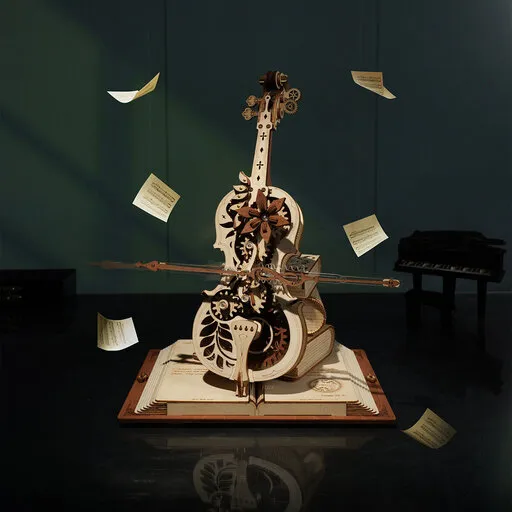
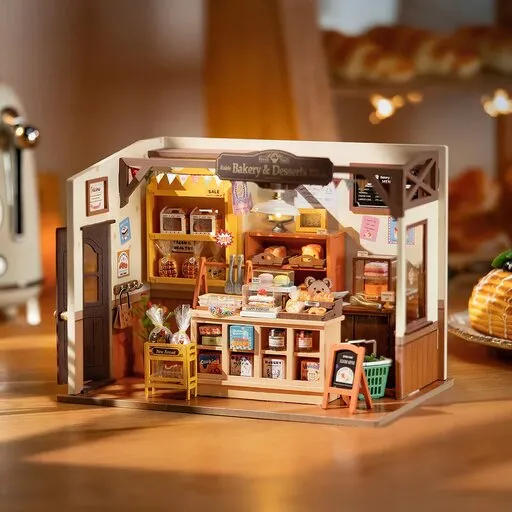
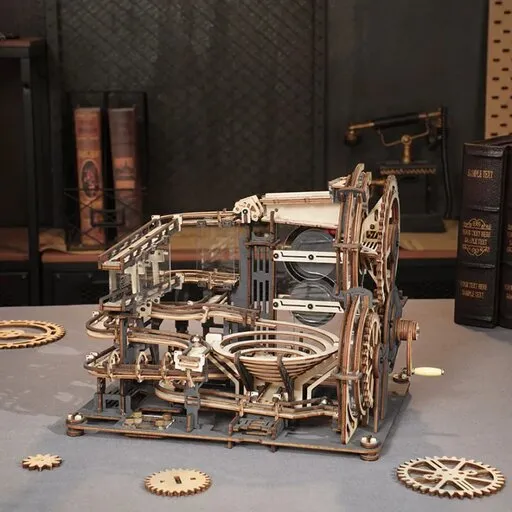
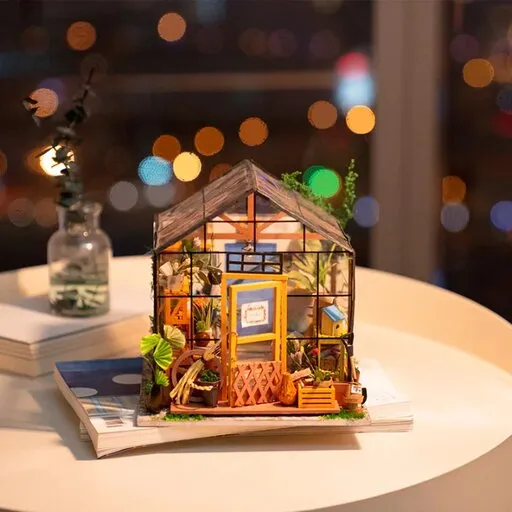
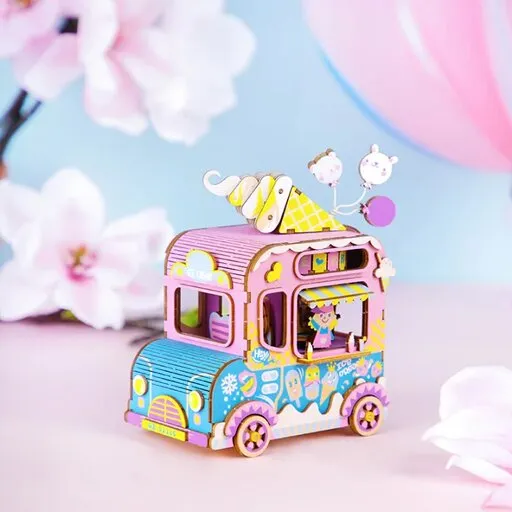
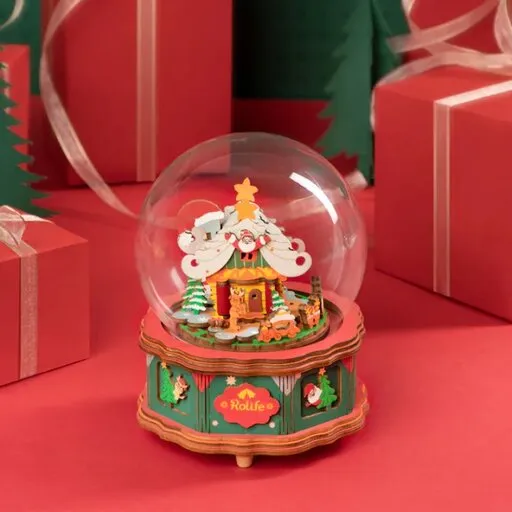
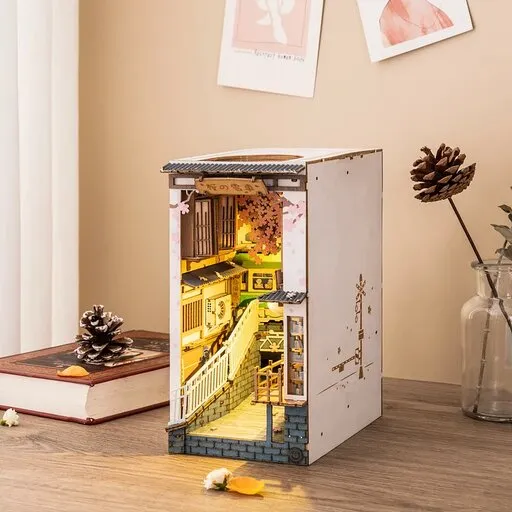







A small wooden building kit that a child builds in one afternoon and then plays with or puts on display fits well in the boot. Choose by the age on the box first: it is a lower limit, so skip a model with a higher age than your child’s. Then think about patience. A child who lasts a quarter of an hour at the table needs only a few dozen larger pieces and a quick result. A child who also finishes a longer puzzle can handle more pieces and finer steps.
St Nicholas Day is on 6 December and the boots go into the window the evening before. A small kit fits in the boot when its packaging is flat, and after the sweets it leaves a shared moment at the table and a finished model on the shelf. What decides is the age, the number of pieces, the assembly time and whether you build the first steps together.
Contents of the article
How to choose a model by age and patience
The age the manufacturer gives is a lower limit, not an estimate of difficulty. A model with a higher age may have smaller pieces or steps where two parts have to be held at once. The number of pieces mainly tells you how long the build will take, not how hard the individual steps will be. Age ranges differ between guides, so take them as a guide and decide by how your child works with their hands and how long they stay with one thing.
- A preschooler or first-grader building for the first time: look for a model with a few dozen larger pieces and a subject they recognise at first sight, such as an animal or a car. Check whether the instructions show the steps in pictures. If they do, the child builds from them alone and you just read each step aloud.
- A child who likes building but quickly loses interest: choose a model that is finished in one sitting. Look at the assembly time. When it is longer than an hour, plan for two or three shorter sittings, because a child often cannot stay at the table for the whole stated time at once.
- A child who wants the model to move: a mechanism, such as wheels with a spring, adds steps that need precision and sometimes two hands at once. Look for it for an older child, or count on helping with that step.
- A schoolchild who has already built a few models: can handle more pieces and a build of an hour or two. Choose a subject they enjoy away from the table too, such as a musical instrument, a plane or a car. A model with such a subject then does not end up in a drawer.
With a small gift for the boot, what happens to the finished model also matters. A figure or a little car ends up in play, a model of an instrument or a building on a shelf. Think about what your child does with the things they get: do they play with them or display them? If they play, choose a model with fewer small decorations that could break off during play. If they display, the model can have more details and it is enough that it stands nicely.
What to check on the box before buying
On the box or in the shop description you will find five details that decide whether the kit suits the boot. Read them together, because one detail alone is misleading: few pieces do not yet mean an easy build if the pieces are tiny or the model has a mechanism.
| Detail | What to look at | What it means |
|---|---|---|
| Recommended age | whether it is the same as or lower than the child’s age | a higher age means skipping the model, even if the child is skilful |
| Number of pieces | how many there are and how big the smallest ones are | with a few dozen larger pieces expect one sitting, with a hundred or more two or more |
| Assembly time | the time the manufacturer gives | a child often cannot manage it in one go, so split the build into shorter sittings in advance |
| Glue and tools | whether the pieces just slot together, or glue or a craft knife is needed | a model without glue can be built first thing in the morning; gluing and cutting is done by an adult |
| Moving parts | a spring, a rubber band or a gear | they add steps where two parts have to be held at once, so plan to help there |
For the kit to fit in the boot, check the packaging dimensions if the shop gives them. Wooden puzzles are often sold as flat boards with press-out pieces, so they fit more easily in a tall winter boot than in a low slipper. When the package is bigger, put it next to the boot and place only a note in the boot with a hint where to look for the gift.
Small building kits for the boot by age
If you want a specific tip, the shop has three small models for different ages. Wooden 3D puzzle - T-Rex Little Story D006 has 29 pieces and the manufacturer lists it from 5 years, so it suits a first build together. Wooden 3D puzzle - Police car Eco Wood Art is from 6 years, has 88 pieces and, according to the description, moves forward after being wound up, so it is more likely to end up in play. Wooden 3D puzzle - Violin Capriccio ROKR TG604K is from 8 years, has 62 pieces and, according to the description, comes with a wooden stand and a bow, so it will become a decoration for the shelf.


Wooden 3D puzzle - Violin Capriccio ROKR TG604K
- Number of pieces: 62
- Assembly time: 1 h 30 min
- Difficulty: 2
When is St Nicholas Day and by when to choose the kit
St Nicholas Day is on 6 December. On the evening of 5 December, children clean their boots and put them in the window, and in the morning they look for their treats in them. In 2026, St Nicholas Day falls on a Sunday, so the boots will go into the window on Saturday evening.
Choose the kit at least a week ahead, that is by the end of November. You gain time to check the age and the packaging dimensions and to prepare helpers to go with the gift: a bowl for the pieces, a tray and a pencil. If you find that the model does not suit, you still have time to choose another one.
How to give the kit so it really gets built
A build often gets stuck at a step the child cannot read from the picture or undo. So expect to spend the first minutes at the table together, and prepare the helpers before St Nicholas Day.
- Build the first steps together. You hold the instructions and read each step aloud, the child puts the pieces in. When they start saying on their own what goes where, step back and let them lead. Come back only at a stiff joint or at a mechanism that has to be held with both hands.
- You can press the pieces out of the board. The child then puts them together in the order of the instructions. When a piece will not come out of the board, the craft knife belongs only in an adult’s hands.
- Do not force a piece. When a piece does not go into the slot, turn it, try it from the other side and compare it with the picture in the instructions. If the shape fits and it still rubs, go back one step and check whether the previous piece is pushed all the way in.
- Split the build into parts. With a model for more than one sitting, always stop after a finished step of the instructions, not in the middle. The child leaves the table with a finished part and next time knows where to continue.
- Prepare simple helpers. A tray or a box lid keeps the model in progress and the loose pieces together, small bowls sort the pieces by step, and with a pencil the child ticks off a finished step in the instructions.
- Think of younger siblings. If a toddler crawls around at home, build at a table they cannot reach, and put away the small pieces and the leftover boards after the build.
How to choose the difficulty for the very first model is covered in more detail in the article on a child’s first 3D puzzle. If the child has a few models behind them and you want to know what types of wooden puzzles there are, see the overview of 3D puzzle types.
Tip: Pack a small bowl or a little bag for the pieces in the boot together with the kit. That way the child does not have to look for somewhere to put the pressed-out pieces in the morning and can start building right after breakfast.
Frequently asked questions
From what age should a child get a wooden building kit in the boot?
Go by the age on the box, it is a lower limit. Small wooden models are often labelled from 5 years too. Skip a model with a higher age than the child’s.
How many pieces can a child build in one afternoon?
With a few dozen larger pieces expect one sitting, with a hundred or more two or more. It also depends on the size of the pieces and on whether the model has a mechanism.
Does a wooden puzzle need glue?
Many small models are put together by slotting, without glue. Check it in the description or in the instructions. If glue is needed, an adult does this step.
What if the kit does not fit in the boot?
Put it next to the boot and place a note in the boot with a hint where to look for the gift. A flat package with boards fits more easily in a tall winter boot.