
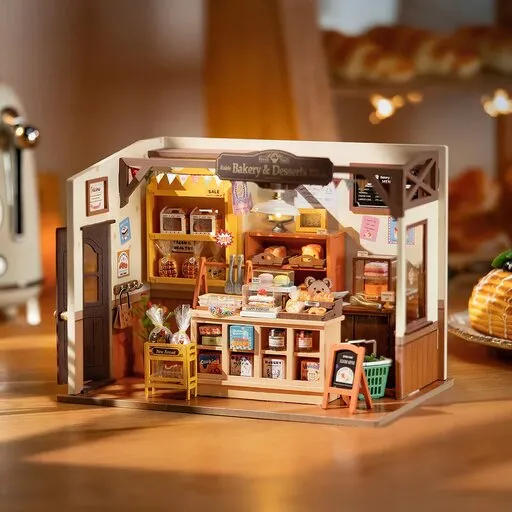
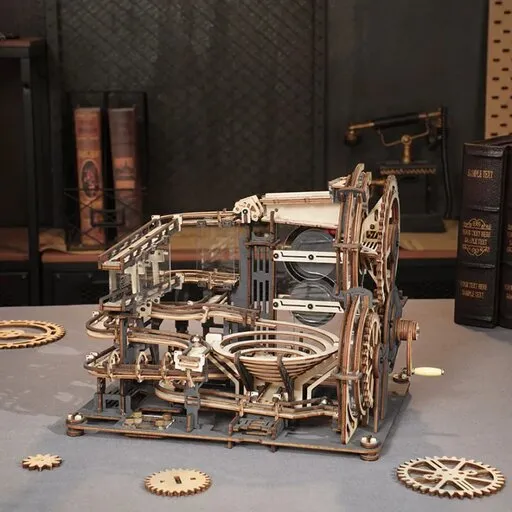

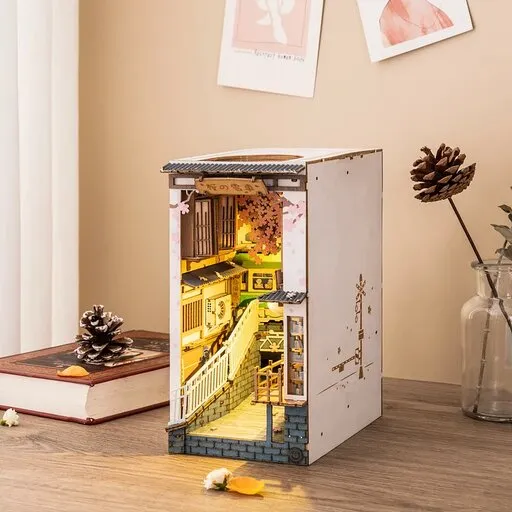







Choose a gift for grandparents by what their eyes, hands and patience can manage, not by how the finished model looks in the picture. Anyone who finds small things harder to see or has stiff fingers will appreciate fewer pieces, larger pieces and assembly without glue. Anyone who likes to sit over one thing for a long time will also stay with a build spread over several evenings.
Before buying, check the number of pieces, assembly time and difficulty in the description, see whether glue or batteries are needed, and work out where the finished model will stand or hang. In 2026, Christmas Eve falls on a Thursday, so it makes sense to have chosen about a week ahead. And if you sit down at the table with them on the first evening and build the first steps together, the model is more likely to get finished than if it stayed in its box on top of the wardrobe. Then split the build into parts, one for each evening, so the work doesn’t put pressure on them.
Contents of the article
How to choose a model by eyesight, hands and patience
For each criterion, first picture the actual person: how they read the newspaper, how they hold a needle or a screwdriver and how long they stay with a crossword or embroidery. The answers will tell you what kind of model to look for.
Eyesight: piece size and light
A small piece is hard when you have to find it on the board, push it out and fit it into a narrow slot. If grandpa or grandma wears reading glasses and uses a lamp for close work, look for a model with fewer and larger pieces and plan for a good lamp. Modellers whose eyesight has worsened with age help themselves with stronger light and a magnifier on a stand or a magnifying lamp, which leaves both hands free.
Hands: finger strength and glue
Wooden pieces are pressed out of the board and then slotted into each other, which takes a little strength in the fingertips. Anyone with stiff or sensitive fingers finds it hard to hold a small piece and press on it at the same time. For such a person, choose a model that is assembled without glue and doesn’t have many small joints, and don’t put anything in the gift that has to be cut with a knife.
While building, a non-slip mat that keeps the pieces from sliding away helps, and so does resting the wrist on the edge of the table, which keeps the hand steadier.
Patience: assembly time and difficulty
Treat the assembly time given for a model as a guide: anyone building for the first time or more slowly will probably need more time. If the recipient can stay with one activity for about an hour, a model with four hours of assembly will last them four to five evenings. For a patient person that is a pleasant project; for an impatient one it is more of a burden. If you are unsure, choose a shorter time and lower difficulty, because a finished first model encourages more than a larger half-built one.
| The recipient’s situation | What to focus on | What to look for in the description |
|---|---|---|
| Sees small things less well, reads with glasses | fewer pieces, larger pieces, good light | number of pieces and photos of the boards |
| Has stiff or sensitive fingers | assembly without glue, few small joints | any mention of glue and tools |
| Likes to work on one thing for many evenings | longer assembly time, model with a mechanism | assembly time and difficulty |
| Wants it finished in one or two afternoons | shorter assembly time, lower difficulty | assembly time and difficulty |
What to check before buying: pieces, time, difficulty and space
Once you know who you are choosing for, go through the model’s description point by point. Each point tells you something different about how the build will go.
- Small pieces. Look at the photos of the boards and the finished model. If you see many small gears, pegs or thin strips in them, the build will need good eyes and steady fingers. If there are few small parts, it can be managed even with weaker eyesight under a good lamp.
- Number of pieces. It mainly tells you how long the build will take. Someone building for the first time can start with a model of up to about two hundred pieces; several hundred pieces is a project for someone who has already built something.
- Assembly time. Divide it by the length of one session the recipient can manage. You get the number of evenings, and from that you can judge whether the build will be a pleasure or drag on needlessly.
- Difficulty. Models usually state a difficulty level. For a first model, go for a lower level and save a higher one for the next gift, once you see how the first one went.
- Glue, tools and batteries. Look in the description for whether the model is assembled without glue and whether tools are needed. Clocks with a quartz movement need a battery: check whether it is in the package, and if not, buy it in advance so the clock runs as soon as it is finished.
- Language of the instructions. Check what language the instructions are in. If the recipient can’t read it, expect to go through the first steps together and show them how to read the diagrams.
- Space on the table and for the finished model. Building needs a sturdy table where the half-built model can stay for several days. They must be able to put the finished model on a shelf or hang it on the wall, dust it and move it, so for larger models check the dimensions and weight in the description.
The article 3D puzzles for adults: what makes a model challenging looks in more detail at everything that makes a wooden model challenging.
Music box, gramophone or clock: what to choose from
A model with music or a clock has one more job once it is finished: it plays, ticks or tells the time. So grandparents can keep coming back to it, not just keep it on a shelf. A mechanism, however, demands more precision during the build, so it suits someone who has patience and can see small gears well under a lamp.
The article How a music box works: from the crank to the melody explains how a music box turns the rotation of a cylinder into a melody.
Models with music and clocks from simpler to more challenging
- Gramophone Rolife TG408 has 122 pieces and the lowest difficulty level of these four. It is a shelf ornament; the description doesn’t mention a playing mechanism, so if the gift should play music, choose the music box instead.
- Wall clock Zodiac ROKR LC601 has 168 pieces and a quartz movement. The date and the day of the week are set on it by turning a gear wheel. It needs a free spot on the wall.
- Music box magic cello ROKR AMK63, shaped like a cello, is assembled without glue or tools according to the description, and once finished it plays the melody “The Swan” by Saint-Saëns.
- Cuckoo clock ROKR LC901C is the biggest project of these four, with 435 pieces. The cuckoo pops out and sings every hour, and the clock runs on three AAA batteries, which are not included in the package, or on a USB-C cable. According to the description, it measures 21.2 × 17 × 34 cm and weighs 1,450 g, so find a sturdy spot for it on a shelf or chest of drawers in advance.
All four models have a recommended age of 14 and over. This applies to everyone assembling at the table, including grandchildren who would like to help.

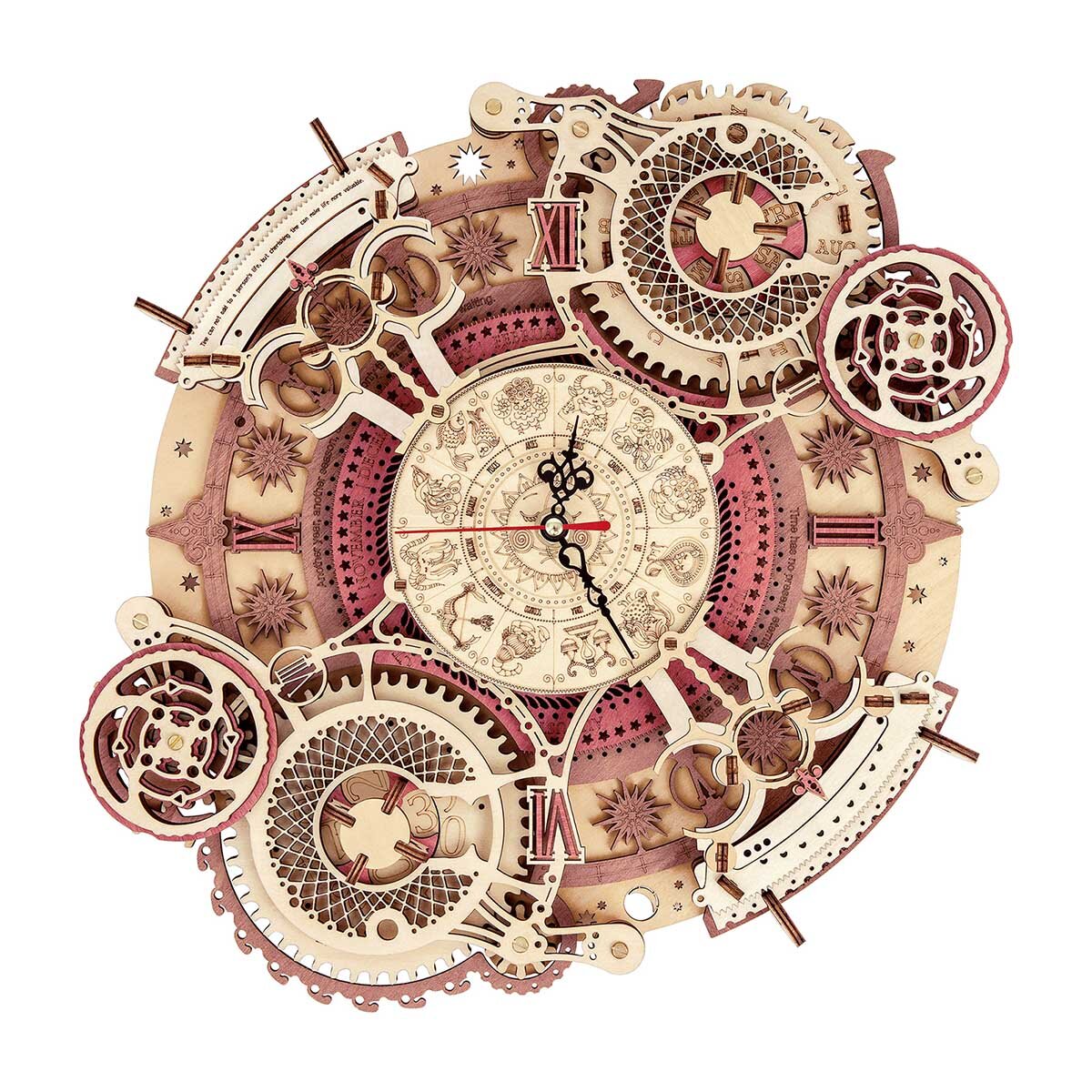
Wooden mechanical 3D puzzle - Wall clock Zodiac ROKR LC601
- Number of pieces: 168
- Assembly time: 4 h
- Difficulty: 3

Wooden mechanical 3D puzzle - Music box magic cello ROKR AMK63
- Number of pieces: 199
- Assembly time: 4 h 30 min
- Difficulty: 4
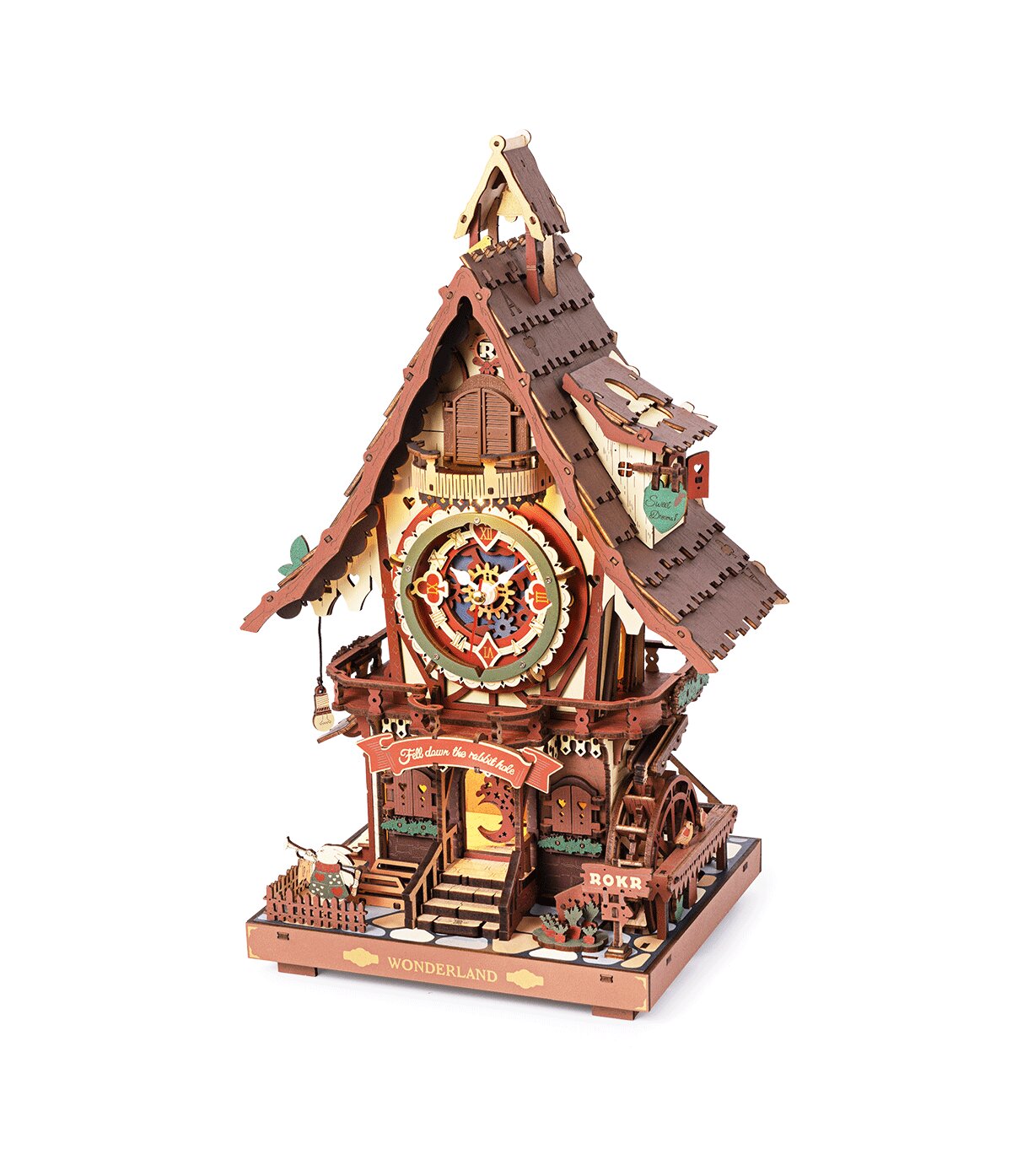
Wooden mechanical 3D puzzle - Cuckoo clock ROKR LC901C
- Number of pieces: 435
- Assembly time: 6 h
- Difficulty: 4
How to give the gift so it really gets built
A model that stays in its box makes no one happy. It helps if you sit down at the table with the recipients on the first evening, lay out the boards and build the first steps together. After that they know how the pieces are pushed out, how to read the diagrams and where to continue.
- Prepare the space. All it takes is a sturdy table where the build can stay for a few days, a lamp that lights the board from the side, and a tray or a box lid for the half-built model. When the model and the boards lie on the tray, the table can be cleared after dinner and nothing gets lost.
- Build together on the first evening. Go through the package contents using the list in the instructions so you know right away that nothing is missing, and build the first section. Watch where the recipient gets stuck: finding a piece on the board, pushing it out or reading the diagram. That is where you will help next time.
- Split the build into parts. Always stop after a completed step of the instructions, not in the middle. The next evening it is clear where to continue, and no loose pieces lie around the half-built model.
- Test the mechanism before you close it. With a clock or a music box, turn the gears by hand while you can still see inside. If something rubs, go back a step and check whether the piece is pushed all the way in; don’t force anything.
- Agree on how you will help each other from a distance. If you live far away, have them send you a photo of the instruction page and the half-built model when the build gets stuck. That makes it easier for you to tell them which piece goes where.
How to split a longer build over several evenings and where in the instructions it is safe to stop is covered in the article A big model over several evenings: how to split the build. What to test in a mechanism before you close it is described in the article Mechanical model: what to test before you close it.
Tip: Pack a tray for the pieces with the gift, plus a lamp whose light can be aimed at the table. That way grandparents can start building right away and don’t have to hunt for anything.
When to choose the gift so it is ready for Christmas
In Slovakia, gifts are given on Christmas Eve, after the Christmas Eve dinner. Christmas Eve, 24 December, falls on a Thursday in 2026.
Choose the model about a week before Christmas Eve, that is by 17 December. You don’t need that week for wrapping but for preparation: reading the description once more, buying batteries for the clock, getting the tray and lamp ready and agreeing when you will first sit down to build together. The holidays after Christmas Eve are a good time for that.
If you are choosing later, go for a model with a shorter assembly time and no batteries, so there is nothing extra to buy.
Common questions
Can a grandparent who has never built anything manage a model?
They can, if they start with fewer pieces and lower difficulty and build on the first evening with someone who helps. It isn’t guaranteed; eyes, fingers and patience decide. Save a model with a mechanism for a second gift.
Does a wooden model need glue?
Many wooden models are assembled by slotting the pieces together without glue. Check this in the model’s description. If glue is needed, it is an extra step for older hands.
What to choose if the recipient has weaker eyesight?
A model with fewer, larger pieces and a good lamp to go with it. For close work, a magnifier on a stand helps, because it leaves both hands free.
By when should you choose a gift for Christmas 2026?
It makes sense to have chosen by 17 December, a week before Christmas Eve, which falls on Thursday 24 December. That leaves you time to buy batteries and prepare a space for building.